Skip to content
Michael Ferreyros

Resume

Michael Ferreyros

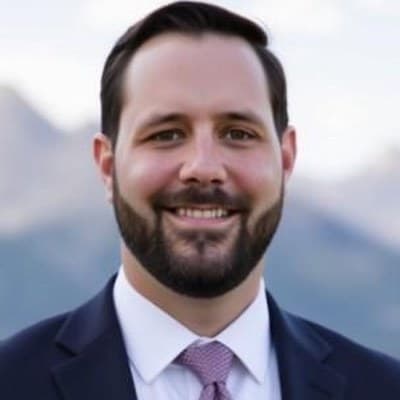
Michael Ferreyros, head and shoulders, in a suit and tie against a mountain backdrop

Research operations, finance, and AI enablement at the Gates Institute, University of Colorado Anschutz Medical Campus.

Fifteen years in cell and gene therapy, bench to cGMP to the business side. The arc is business, then science, then business again with AI. Corporate recruiter, then bench scientist engineering mesenchymal stem cells (MSCs) with modified RNA, now operator: budgets, compliance, grants, and the AI systems that hold the pieces together.

Translational medicine is a team sport: bench-to-bedside fails without payers, tech transfer, donors, and compliance bought in before the science arrives. AI is how one person builds that connective tissue.

Years
15
Cell and gene therapy
Portfolio
~$10M
Research funding
Modules
12
Live in GatesHub
Reclaimed
~80%
Lab procurement time
Papers
5
Four peer-reviewed, one preprint

Where I am

Now

2025 – present

Gates Institute, CU Anschutz Medical Campus

Assistant Director, Business & SOM Research Operations

Research operations, finance, and AI/data enablement. Promoted out of the Program Manager role in 2025, on the strength of the Executive MBA and leading the institute's AI and data-enablement program.

  • AI and data enablement lead. The strategy is pilots inside of pilots: win one stakeholder, spend that win on the next. Current ladder: the finance team, leadership, and the front-door strategy group, then Gates as a whole, then Gates as the university's pilot. In progress, not concluded.
  • Fiscal responsibility for approximately $10M in research funding. Budgets, forecasting, procurement, capital equipment.
  • Research operations across the translational pipeline, discovery bench through cGMP handoff.
  • Reporting and agency coordination: NIH, DoD, and the VA. Foundation and philanthropic awards alongside them. CU Anschutz representative to the VA: voting member of its Institutional Biosafety Committee, and on the IRB Subcommittee on Research Safety.
  • Compliance across animal (IACUC), biosafety (IBC), human subjects (COMIRB/IRB), and FDA advanced-therapy frameworks. Regulatory submissions for cell and gene therapy development.
  • Partner with principal investigators on experimental design, grant strategy, and budget development. One person reads both the science and the ledger, so the budget matches the experiment.
The shape of it

Fifteen years, one axis

Roles, degrees, and papers on the same timeline. Colour is the phase; the overlap is the point.

At the benchOperations and AIDegreePublished

Year

201120142017202020232026

Corporate recruiter

← before 2011

Assistant Director, Business & SOM Research Operations2025 – present

Gates Institute, CU Anschutz Medical Campus

Research Program Manager2021 – 2025

CU Anschutz Medical Campus

Senior Professional Research Assistant, Lab Manager2014 – 2021

Gates Center for Regenerative Medicine

Student Research Assistant, Freed Lab2012 – 2014

CU Denver

BRAiN Research Assistant, Charlesworth Lab2011 – 2012

Auraria Campus

Executive MBA2024 – 2026

University of Colorado Boulder, Leeds School of Business

BS, Integrative Biology and Biochemistry2011 – 2014

University of Colorado Denver

Published

20242022201620132025

What I have shipped

Systems built

Four institute tools in production, one personal system, one standing practice. Case studies and recorded demos under Work.

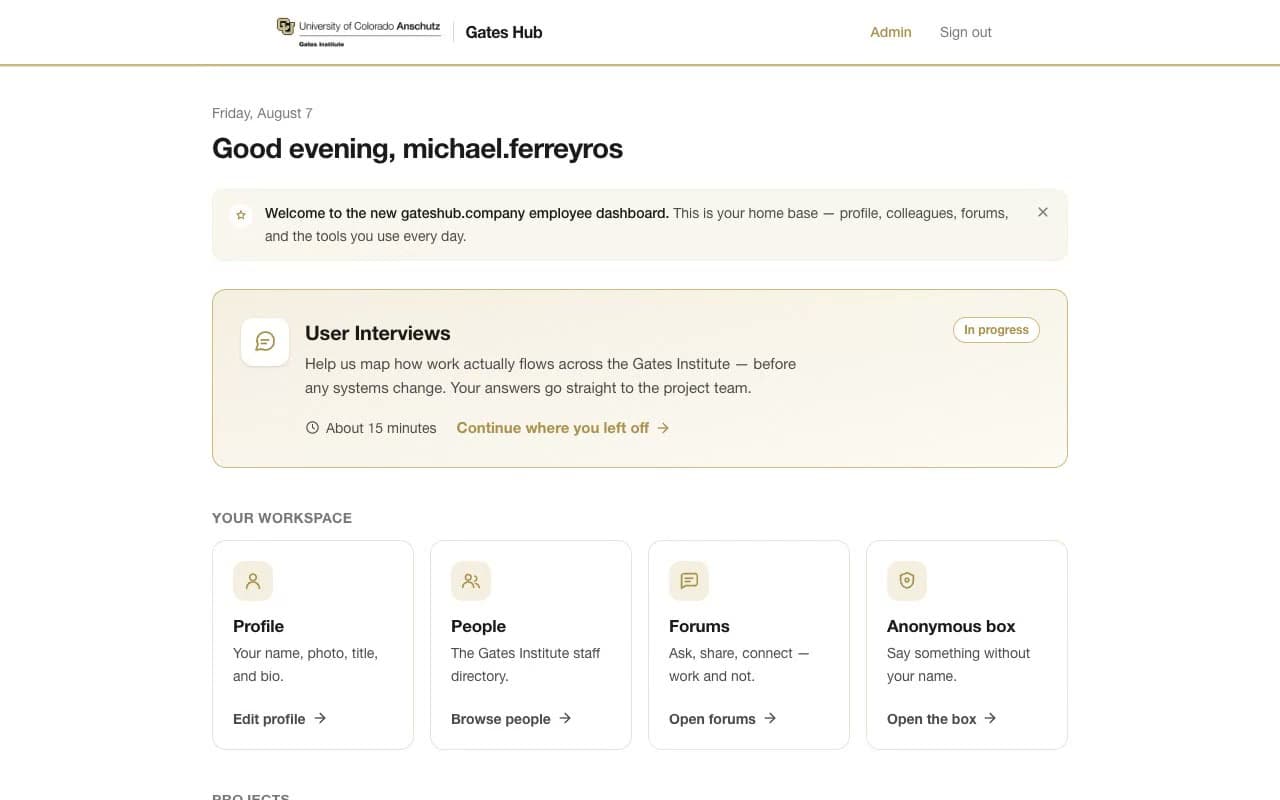
  • The GatesHub employee dashboard: workspace cards for profile, people, forums, and the anonymous box

    GatesHub

    Connected-data portal for the institute, about twelve modules live. LIMS, ERP, and the quality management system (qPulse) feed one hub; employee dashboards and billable hours feed the client quoting system. CRM, onboarding, and org-health screening ride the same spine. The user-interview module ran a full round of interviews for a tech analysis in a day instead of weeks of one-on-ones: people talk their answers, and the model digs into each one live for the pain point underneath. Built Kaizen-style, a bite at a time. → case study

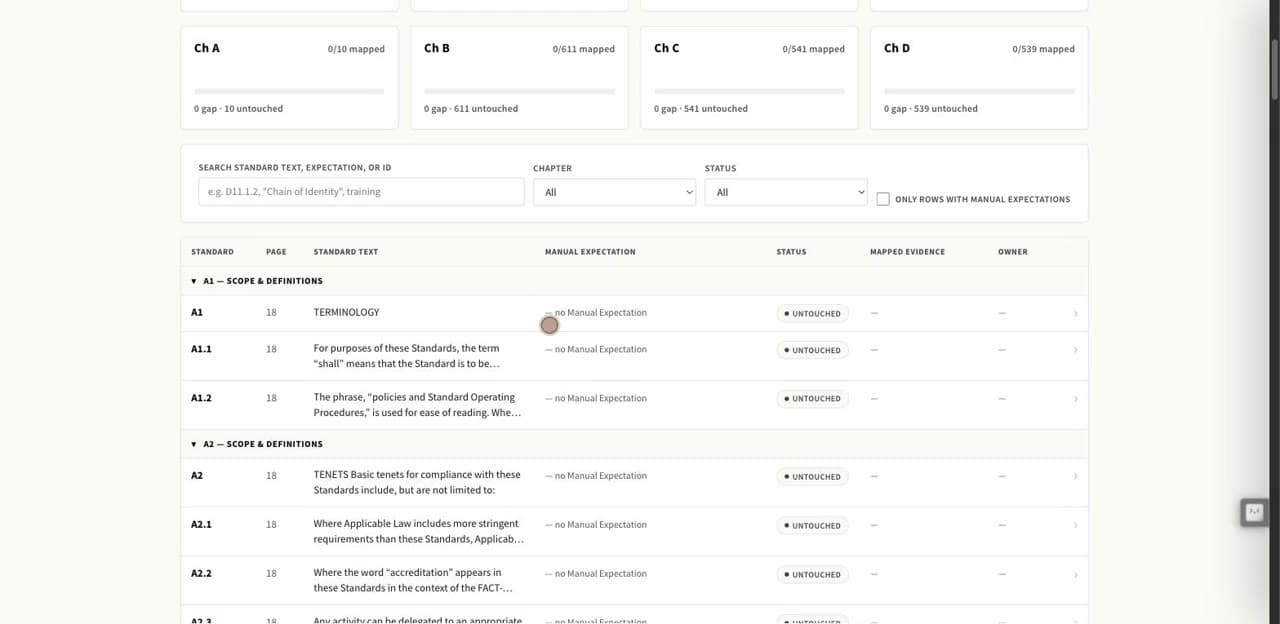
  • FACT-Codex mapping evidence documents against accreditation standards

    FACT-Codex

    Accreditation tool that maps evidence documents against the FACT-JACIE standards, clause by clause, and refuses to claim coverage the evidence doesn't support. The refusal is the feature: an accreditation tool that overclaims fails you in front of an inspector. Internal institute system, not a public app. → case study and demo

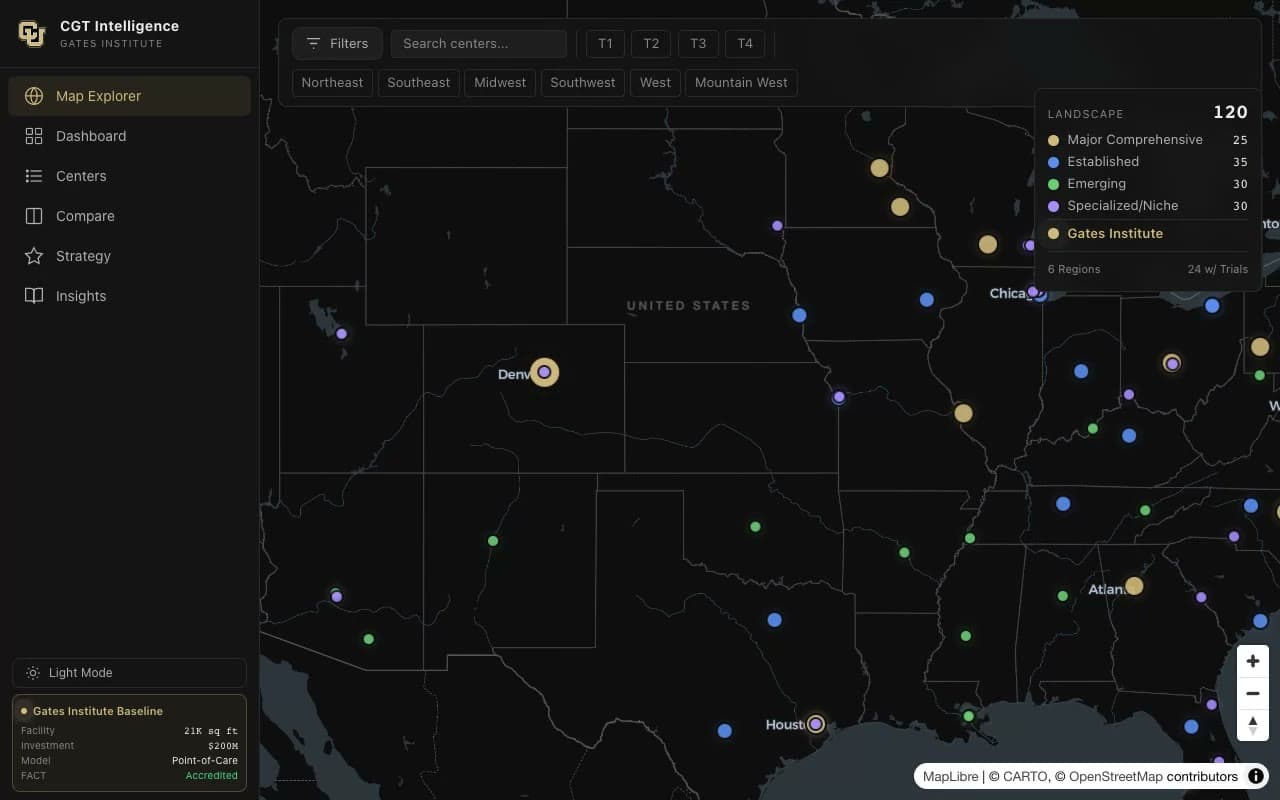
  • The CGT Intelligence Dashboard: cell-and-gene-therapy centers plotted on a map

    CGT Intelligence Dashboard

    120 cell-and-gene-therapy centers on one map. Internal institute system, access-controlled. → case study and demo

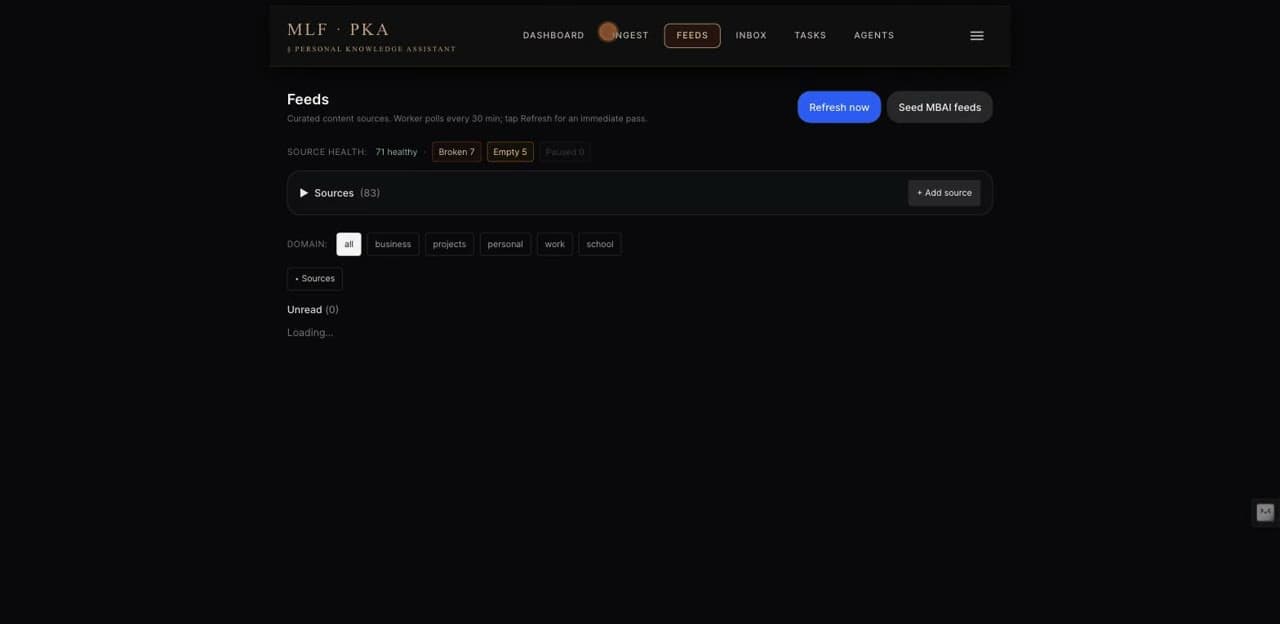
  • The personal knowledge assistant: wiki, tasks, and ingestion running over an MCP server

    Personal knowledge assistant

    Wiki, tasks, and ingestion on an MCP server I wrote. The one personal system on this list. → case study

  • Lab and ops automations

    Automated lab ordering and receiving, saving ~80% of procurement time in the research lab. Equipment alarms, Power Automate workflows, procurement and scientific-admin flows. Each request becomes a record and the workflow does the chasing, so scientists stay at the bench. Executive news is curated by role (science for the CSO, academic-medical-center finance and donor news for the CFO) so nobody gets a firehose.

  • Multimodal safety evaluations

    Standing practice, two recent studies. A destructive-action eval across eight frontier models: which refuse, which comply. That run caught my own approval gate being bypassed; I closed the gate and re-ran the eval to prove the fix. Separately, an eval for an EMBA presentation ran synthetic data with deliberate trip-ups across five models: Claude, Grok, OpenAI, and Gemini in cloud, desktop, and terminal harnesses, plus Perplexity as a model-only baseline. The chat interfaces did the task and left nothing behind that made the next run shorter or cheaper. The cowork and code harnesses left reusable artifacts. That is the difference that decides what a team should standardize on.

Organizational work: proponent of the hub-and-spoke model at Gates so branches stop coordinating pairwise, and of Kaizen and the J-curve of productivity as the frame for adoption.

At the bench

The work behind the line items

Recordings and rooms from the years under Experience.

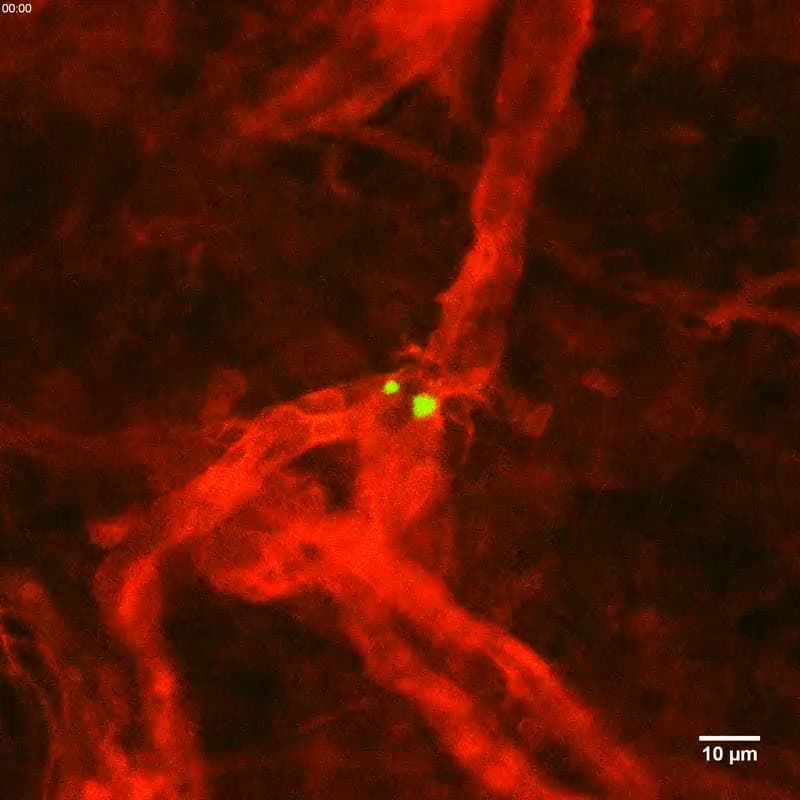
Intravital imaging of a live mouse ear: a green infused MSC among red host tissue
The extravasation event, as recorded. Green is an infused MSC; red is host tissue.
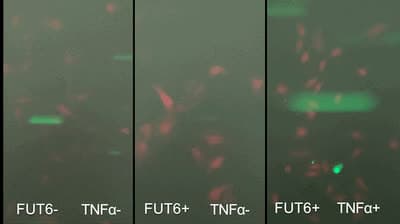
FUT6-modified GFP-labeled human MSCs flowing over a HUVEC monolayer
FUT6-modified, GFP-labeled human MSCs over a HUVEC monolayer: an endothelium instead of a purified protein.
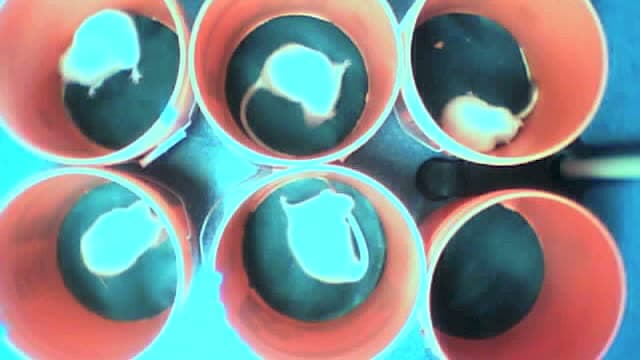
Overhead view of the rotation-test chambers during an apomorphine rotation assay
The rotation test after transplant: the behavioral readout the model exists to produce.
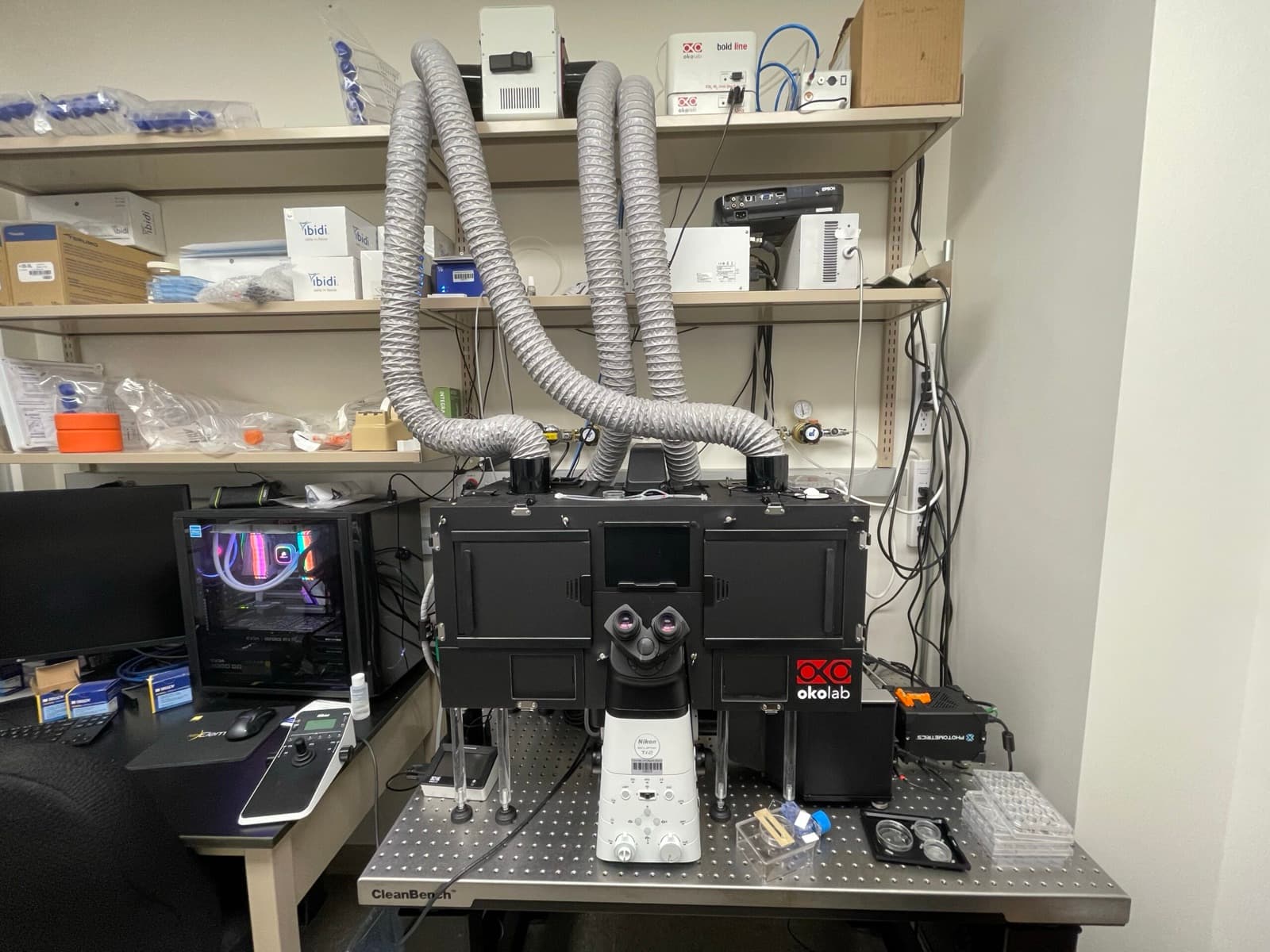
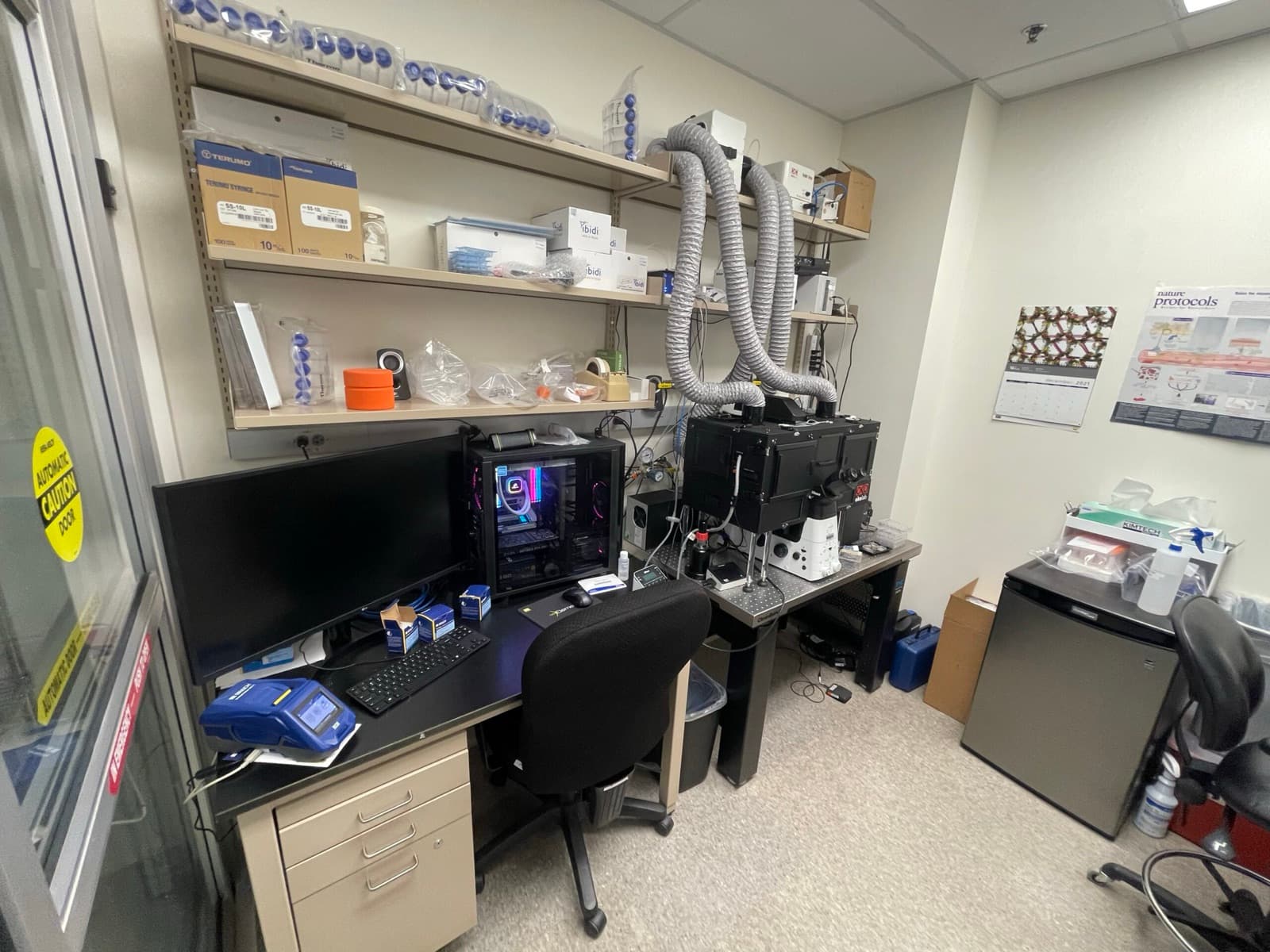
Live-cell imaging rig: a research microscope inside a climate-controlled enclosure, driven by a custom-built workstation
Live-cell imaging rig, run from a workstation built for the job.
A spinning disk confocal microscope with its controller stack
Spinning disk confocal. Both careers point at the same bench.
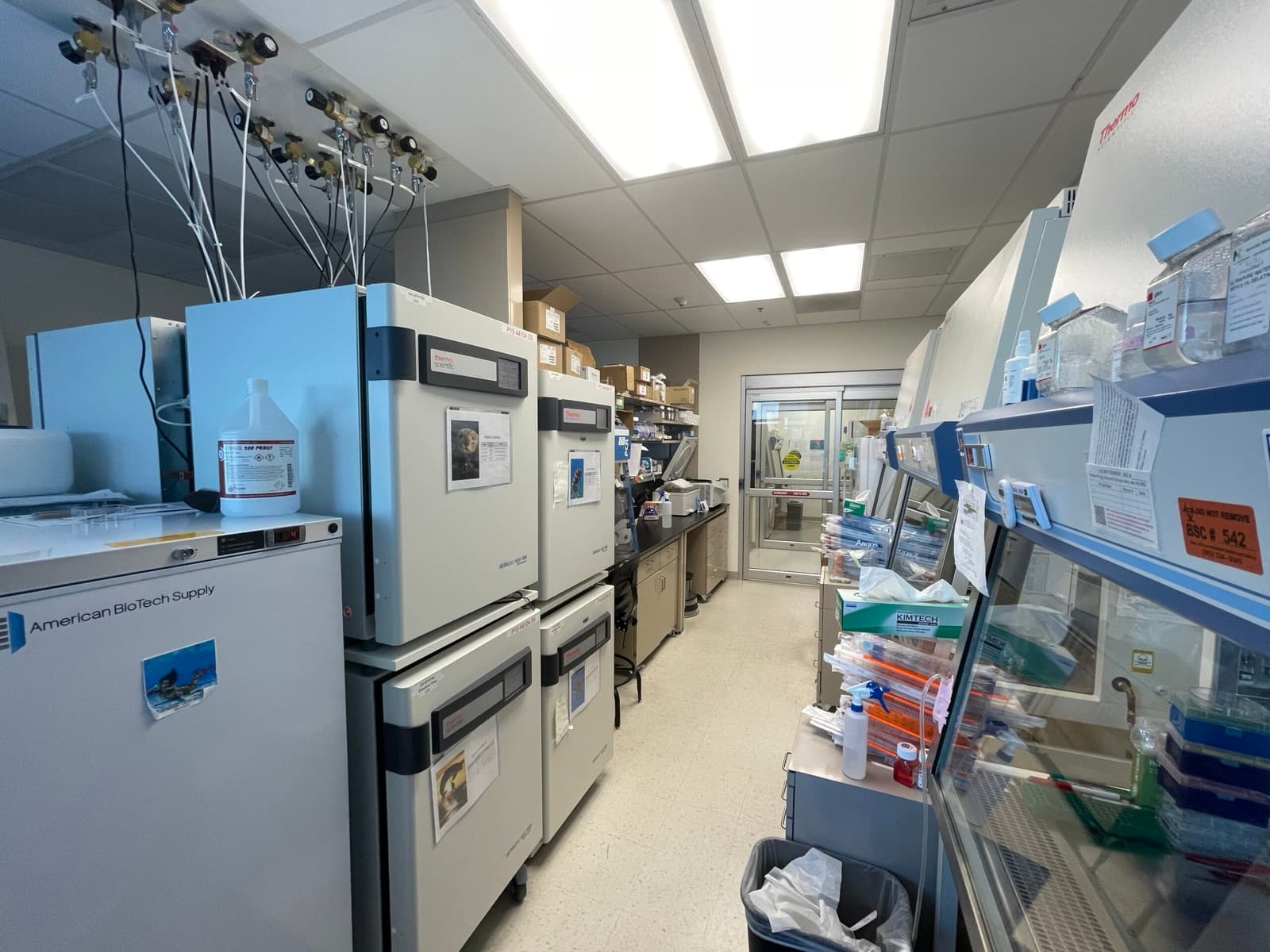
A tissue culture suite with biosafety cabinets and incubators
Tissue culture suite. The cGMP facility was built to mirror rooms like this one.

Role by role

Experience

2021 – 2025

CU Anschutz Medical Campus

Research Program Manager

  • Research management for the Charles C. Gates Center for Regenerative Medicine, which became the Gates Institute. Same place ever since, growing with it.
  • Ran ~$2.1M/year of laboratory operations.
  • Lab manager for the Roop, Bilousova, and Kogut labs. Trained PhDs in the labs' core methods; no PhD of my own.
  • Protocol management across IRB, IBC, and IACUC. DEA controlled-substance compliance.
  • Technology transfer from the research bench to the Gates Biomanufacturing Facility: the kind of handoff that only works when research, manufacturing, regulatory, and compliance are already talking to each other.
  • Institute build-out: equipment purchasing, facilities, vendor partnerships (STEMCELL Technologies, Miltenyi) chosen with the clinic in mind from day one. The cGMP facility was mirrored to the research labs: research picked equipment for discovery reasons, GMP matched it so the bench-to-GMP transition would be shorter.
  • Argued the labs into exosomes, lipid nanoparticles, and the senescence-associated secretory phenotype (SASP) years before those were fashionable directions.

2014 – 2021 (Professional Research Assistant, 2014 – 2017)

Gates Center for Regenerative Medicine

Senior Professional Research Assistant, Lab Manager

  • Heritable blistering skin disorders and skin cancer. Transiently engineered iPSC approaches.
  • Harlequin Ichthyosis and ABCA12 (Roop lab): finished prior postdocs' unpublished work and carried it to publication, the PLoS One 2016 mouse-model paper under Selected publications.
  • Own IP thread: MSCs modified with modified RNA: modified nucleotides, optimized poly-A tails, ARCA and methylation caps, extensive molecular cloning. FUT6 modified RNA to induce HCELL on human and mouse MSCs, engineering homing to inflamed tissue, then paracrine signaling. The work brought large grants into the lab.
  • Built the assays that measured it: transendothelial migration assay for high-throughput screening, two shear-flow assays, intravital confocal imaging for in vivo homing.
  • Laboratory compliance and management. Business management for the Stem Cell Biobanking and Disease Modeling Core.

2012 – 2014

CU Denver

Student Research Assistant, Freed Lab

  • Embryonic stem cell replacement therapy for Parkinson's disease. Neural stem cell and dopamine neuron differentiation.
  • microRNA profiling to improve differentiation efficiency. NGS sequencing, top up- and down-regulated microRNAs identified.
  • Stereotactic implantation and behavioral assays.

2011 – 2012

Auraria Campus

BRAiN Research Assistant, Charlesworth Lab

  • Post-transcriptional regulation by zygotic arrest proteins (Zar1, Zar2) during fertilization and early embryogenesis. My first lab.
  • RNA/DNA extraction, RT-PCR, cloning.

Teaching

Business people do not need to become developers. They need to pick the right model for a task and structure folders, projects, and CLAUDE.md files, because that is the format agents do their best work in. Agents for business runs on software-engineering and systems-thinking fundamentals, not syntax. That is what I teach.

  • CU Boulder, Leeds School of Business: co-founder of the AI MBA Club and its bi-weekly seminar. Workshops for EMBA students, faculty, and advisory-board members.
  • "Beyond the Chatbot": 3.5-hour hands-on workshop for the CU Executive MBA Leads cohort. Model-landscape literacy, NotebookLM study workflows, and every student leaves with a working environment and one reusable AI skill they built themselves. Includes the interactive Executive's AI Field Guide.
  • Gates Institute training: loops, graph engineering, and building skills and connectors. A skill plus a connector is a plugin. One person builds it; the team uses it.

Open science

Years in Open Science and decentralized science: public-goods funding work with Gitcoin, time inside DAOs while the infrastructure took shape, and explainers on the mechanisms while they were new (Understanding Quadratic Funding). The point: personalized medicine as a public good, not another divider of haves and have-nots. The long version is under Open Science.

Ventures

  • 7Versions: AI consulting startup, built on the thing people kept asking me to do anyway.
  • topcut.ai: AI Pokémon TCG app. Deployed, invite-only beta.

Education

Executive MBA — University of Colorado Boulder, Leeds School of Business 2024 – 2026

BS, Integrative Biology and Biochemistry — University of Colorado Denver 2011 – 2014. NIH Blueprint ENDURE BRAiN program participant.

BS, Industrial/Organizational Psychology — Colorado State University Corporate recruiter after graduation. The 2010 BP oil crisis sent me back to school, into science.

Selected publications

Five papers, four peer-reviewed and one preprint. PMIDs so you can check any of it.

microRNA expression profiles of dopamine neurons derived from embryonic stem cells. Society for Neuroscience poster, 2014. Freed lab.

Patent attribution note: the RNA reprogramming and single-step gene-correction technologies from that period belong to Drs. Bilousova and Kogut. I ran the operations around them.

Domains

Science: cell and gene therapy, iPSCs, mesenchymal stem cells (MSCs), modified RNA, gene correction and editing, skin regeneration and disease modeling, extracellular vesicles, microscopy and high-throughput screening, laboratory automation.

Regulatory and operations: FDA advanced-therapy requirements, cGMP, tech transfer, IACUC, IBC, IRB/COMIRB, DEA. Grant strategy and sponsored-research administration. Capital equipment and procurement.


This page is the resume. The rest of the site is the evidence: Work, Science, Teaching.