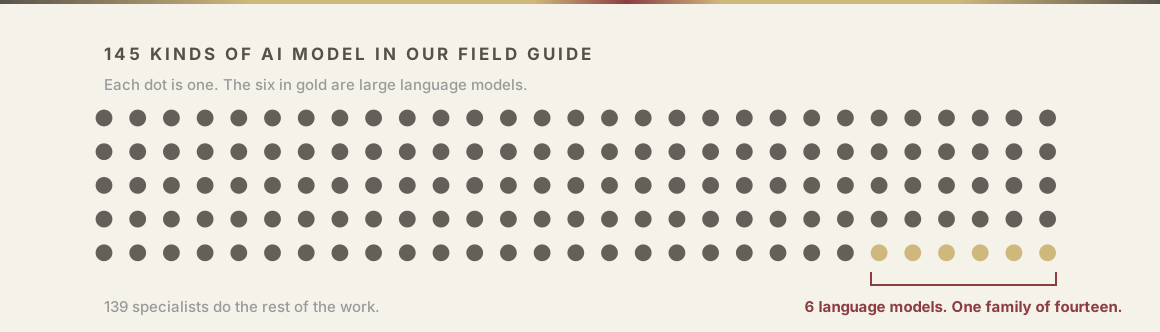
Reach for a large language model by reflex and you will often pick the wrong tool. Language models are one small family of AI, six of the one hundred and forty-five kinds of model in my field guide. Most business problems, from forecasting demand to catching fraud to reading an invoice, are handled better, cheaper, and faster by a specialist model built for that one job. Here is how to tell which you actually need.
The reflex that quietly wastes money
When every AI story is about chatbots, every problem starts to look like a chatbot problem. So a team pastes a spreadsheet into a language model and asks it to forecast next quarter, or runs ten million support tickets through one at a time to sort them into twelve buckets. It works in the demo. Then the bill arrives, the numbers do not add up, and no one can explain the answer. A language model cannot do arithmetic reliably over a long series, has never seen what your customers did last year, and costs a fortune run a million times. The problem was never the model's intelligence. It was using a language tool for a job that is not about language.
Specialists do the work. The language model takes the order.
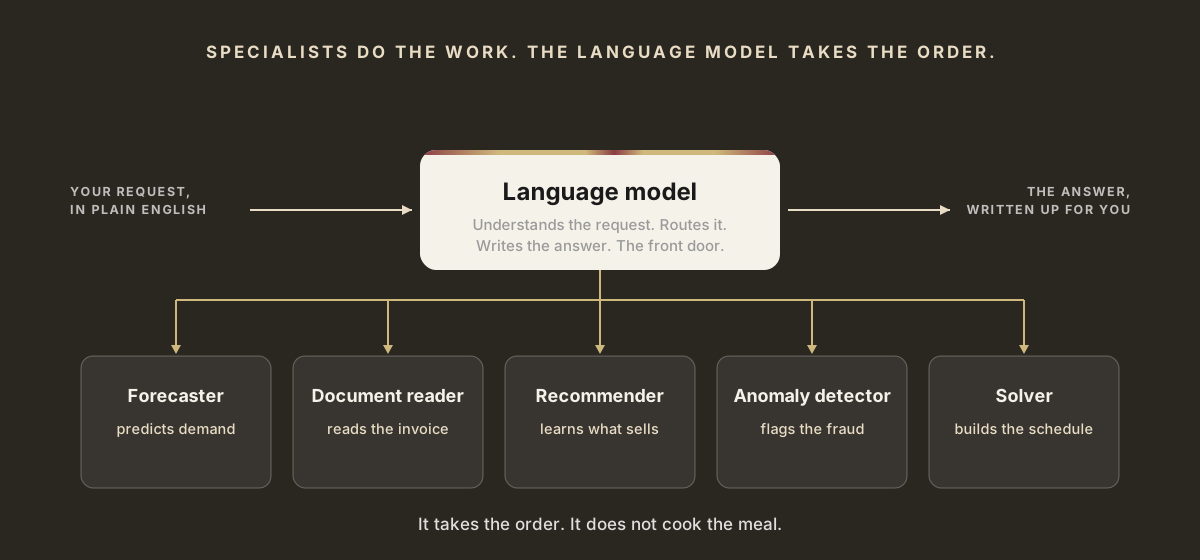
The pattern that actually wins on cost, speed, and accuracy is quieter. A forecaster predicts demand. A vision model reads the invoice. A recommender learns what customers buy next. An anomaly detector flags the fraud. A solver builds the schedule that never breaks a rule. Each one is small, fast, and built for a single job. The language model sits out front as the interface: it understands the request in plain English, hands each part to the right specialist, and writes the result back up in plain English. It takes the order. It does not cook the meal.
How to pick, in two questions
You do not need to memorize one hundred and forty-five models. You need two answers: what are you starting with, and what do you need back. A spreadsheet and a predicted number point to one family. Images and a pass-or-fail verdict point to another. Answer those two honestly and the family usually names itself, along with the trap that catches most teams.
This is the whole idea behind how I work. AI made output infinite, and judgement stayed finite. The value is not in generating more. It is in choosing the right tool, which is sometimes an LLM, and most of the time is not.
I first published this on the 7Versions site.